C-Cube Partners with Medhavi Foundation: A New Step Towards Skill-Based Certification
As the Centre Director of C-Cube Centre of Computer Education in Kolkata and a computer education mentor with more than 25 years of experience, I have always believed that students need more than classroom knowledge to prepare for their careers. They need practical skills, confidence to apply those skills and, where applicable, credible documentation of their learning.
That is why I am pleased to share an important milestone in C-Cube’s journey. To learn more about C-Cube’s background, experience and approach to computer education, visit our About C-Cube page.
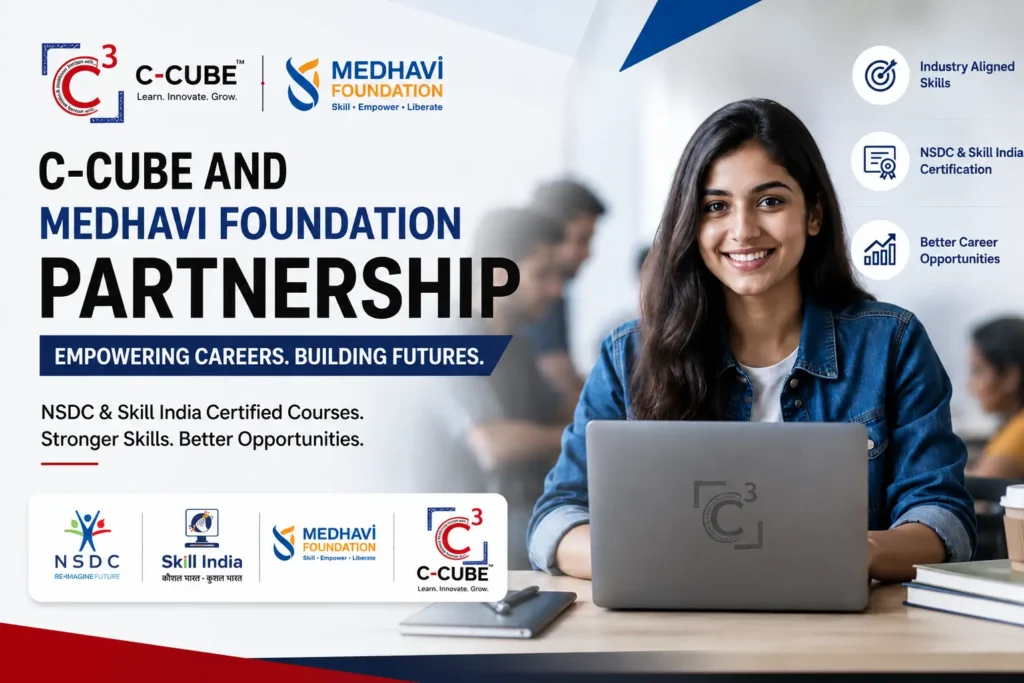
C-Cube has signed an MOU with Medhavi Foundation and is now associated with Medhavi Foundation as a Certification Partner for different IT and Vocational Courses .
For our students, this partnership strengthens the connection between practical training, skill development, and certification. It is another step in our continuing effort to make career-focused computer education more structured and relevant to workplace requirements.
What Is the C-Cube and Medhavi Foundation Partnership All About?
Students may naturally ask, “What does this partnership actually mean for C-Cube?”.That is a very reasonable question.
Under the signed MOU, C-Cube is associated with Medhavi Foundation as a Certification Partner. The partnership provides an additional certification pathway within the applicable programme and certification framework.
C-Cube’s association with Medhavi Foundation can also be independently verified through the official Medhavi Foundation Skill Certification Partners page, where C-Cube Centre of Computer Education is listed under Computer Education IT Skills
From a learner’s perspective, I see the journey as:
Learning → Practical Training → Skill Development → Assessment/Learning Outcome → Certification → Career Readiness
The important point is that certification should support learning, not replace it.
As a mentor, I would always advise students to first concentrate on developing genuine skills. A certificate becomes much more meaningful when it represents something you can actually do.
Why Is This Partnership Important for C-Cube Students?
For students, the value of the C-Cube and Medhavi Foundation Certification Partnership goes beyond having additional logos on a certificate. The bigger advantage is the opportunity to connect practical training with a structured skill-development and certification framework.
Standardised Learning and Qualification
Where the applicable programme is aligned with the National Skills Qualifications Framework (NSQF), learners benefit from a structured qualification framework designed to maintain consistent standards of knowledge, skills and competency.
For a student, this provides a more organised way of understanding what they are expected to learn and demonstrate after completing a particular course.
Industry-Relevant Skills
Another important aspect of the NSDC and Skill India ecosystem is its focus on skills that are relevant to employment.
Where Sector Skill Councils (SSCs) and the applicable programme framework are involved, occupational standards and competency requirements are developed with industry relevance in mind. This helps connect training and assessment with the types of skills required in real workplace situations.
This is particularly important to me as a mentor because I have always believed that students should learn what they can actually apply, rather than simply memorise concepts for an examination.
Better Career Readiness
The emphasis on practical and competency-based learning can help students become better prepared for workplace responsibilities.
For example, someone completing an IT-related course should ideally be able to demonstrate the relevant technical skills through practical exercises, projects or assessments—not merely show that they attended classes.
Supporting Employability
A recognised certification can add value to a learner’s profile when combined with practical knowledge, project experience and relevant skills.
However, I would advise students not to look at certification as a guarantee of employment. A student’s actual career opportunities will still depend on their skills, educational qualification, interview performance, experience and employer requirements.
What About the NSDC and Skill India Logos?
Through our partnership with Medhavi Foundation, C-Cube is now a Certification Partner for different IT and Vocational courses.
For eligible students completing the relevant courses, the certificate carries the logos of NSDC, Skill India, Medhavi Foundation and C-Cube.
For me, the important part is not simply seeing these logos on a certificate. What matters is that a student’s practical training, skill development and certification come together as part of a structured learning journey.
So, when students receive this certificate after successfully completing an applicable course, it represents more than classroom attendance. It becomes a formal record of their learning under the relevant certification framework, alongside the practical training they have received at C-Cube.
As a mentor, however, I would always remind students that a certificate should support your skills, not replace them. The real advantage comes when you can combine your certification with practical knowledge, project experience and the confidence to apply what you have learned in a real workplace.
C-Cube’s Journey Towards Skill-Based Training
The Medhavi Foundation association is not an isolated development. Over the years, C-Cube has continued to develop relationships and training associations that support our broader approach to practical computer education and skill development.
Our journey has included associations and programmes involving:
- IIT Bombay Spoken Tutorial Programme
- Microsoft Global Certification through Anudip Foundation
- NASSCOM FutureSkills Prime
- NBCE
- Mahatma Gandhi University
- Medhavi Foundation
Each partnership has its own scope, purpose and certification framework. Therefore, students should always check the specific certification applicable to their particular course rather than assuming that every association provides the same type of certification.
For us, the larger objective has remained consistent: helping learners develop industry-relevant skills through practical and career-focused training.
Why Practical Skills Matter More Than a Certificate
One of the most common pieces of advice I give students is: “Don’t learn a course only because you will receive a certificate.”
A certificate can document a learning achievement, but when you attend a job interview, the interviewer may ask a much more important question: “Can you actually do the work?”
That is where practical skills make the difference.
Over the years, I have seen that students who practise with real examples, projects and workplace scenarios tend to develop much greater confidence than those who concentrate only on completing a syllabus.
So my approach is simple:
Learn the concept → Practise it → Apply it → Build confidence → Then let certification document the achievement.
That is the philosophy behind our focus on skill-based learning and practical training at C-Cube.
What Should Students Look for in a Certified Course?
As a mentor, whenever students ask me which course they should choose, I tell them not to look at the certificate alone. Look at what the certificate represents.
This is where a certification linked to the NSDC and Skill India skill-development ecosystem can become particularly valuable. Where an applicable qualification is aligned with the National Skills Qualifications Framework (NSQF), it is structured around defined learning outcomes, knowledge, skills and competency rather than simply course attendance.
So, before choosing a course, I would advise you to look at these points:
1. Is the qualification recognized within a structured skill framework?
A good certification should have a clearly defined learning outcome. The NSQF framework provides nationally structured levels based on knowledge, skills and aptitude, helping learners understand what competencies a qualification is designed to demonstrate.
My advice: Don’t ask only, “Will I get a certificate?” Ask, “What skills and competencies will this certificate represent?”
2. Is the course connected to industry requirements?
This is one of the reasons I consider the NSDC skill-development ecosystem significant for career-oriented learners.
Sector Skill Councils work with industry to define National Occupational Standards (NOS) and Qualification Packs (QPs), which describe the knowledge, skills and performance expected for particular job roles.
For a student, this creates a much better learning direction than simply studying topics because they appear in a syllabus.
3. Will I actually learn through practical training?
This is something I strongly emphasise at C-Cube. Certification becomes meaningful when it is supported by practical ability.
If you are learning an IT or vocational skill, you should get opportunities to practise the tools, complete exercises, work on projects and apply your knowledge to realistic situations.
That is why I would look for a course that brings together:
Structured Skill Framework + Practical Training + Assessment + Certification
4. How will my skills be assessed?
Don’t simply ask, “Will I get an NSDC or Skill India certificate?”
Ask, “How will my learning and competency be assessed?”
The NSDC skill ecosystem includes defined standards and assessment/certification processes for applicable qualifications. Sector Skill Councils, for example, have roles in standards development and facilitating assessment and certification aligned with QP/NOS frameworks.
As a learner, this distinction matters because earning a certification through an applicable assessment process is more meaningful than receiving a certificate merely for attending classes.
5. Can this make me more career-ready?
This is ultimately what most students want to know. A certification cannot guarantee a job. But when skill development, practical training, competency assessment, and certification come together, they can provide a stronger foundation for entering the workplace.
The NSQF framework is specifically designed around learning outcomes and progression across education, training, and the labour market.
So my advice is simple: Don’t prepare yourself merely to say, “I completed a course.” Prepare yourself to say, “I can perform the work.”
6. Is there genuine placement or career support?
This is another question I encourage students to ask before enrolling.
Some skill-development programmes may include industry linkages, employment opportunities, apprenticeship pathways, or placement support, but this depends on the particular programme and its implementing partners. NSDC’s own description of Sector Skill Councils includes industry linkages aimed at connecting trained candidates with employment opportunities.
Therefore, never assume that a certificate itself guarantees placement.
Instead, ask the training provider: What career guidance, placement assistance, employer connections or apprenticeship opportunities are actually available with this particular programme?
That is a much more practical question.
What This Milestone Means for C-Cube
For me, signing the MOU with Medhavi Foundation is an important milestone in the continuing journey of C-Cube.
But I don’t see it as the destination. I see it as another step towards building a stronger skill development and practical training ecosystem for our learners.
Our direction remains: Quality Education → Practical Skills → Industry Relevance → Certification → Career Readiness
And our philosophy remains simple: Don’t learn only for a certificate. Learn to become capable.
The certificate should document the achievement. The skill, confidence, and practical ability should come from the learning itself.
My Advice as a Mentor
If you are choosing a professional course today, don’t look at certification and practical training as two separate things.
Look for the complete combination:
Industry-Relevant Curriculum
↓
Practical Skill Development
↓
Competency & Assessment
↓
Structured Certification
↓
Career Readiness
That is the kind of learning journey I would recommend to any student who wants to build a serious career.
And this is precisely why I believe our C-Cube–Medhavi Foundation Certification Partnership can add meaningful value to the learning journey of eligible students—not because a certificate alone guarantees a career, but because it can complement the practical skills, competency, and confidence that students develop through their training.
Looking Ahead
Technology and workplace requirements will continue to change, and so must the way we prepare students. As C-Cube continues its journey, we will remain focused on practical computer education, industry-relevant skills, career-focused training and learner confidence, while developing meaningful partnerships that can add value to our students’ learning experience.
The journey continues. Learn Skills. Gain Confidence. Grow Your Career.
Frequently Asked Questions
Is C-Cube now a Certification Partner of Medhavi Foundation?
Yes. Following the signed MOU, C-Cube is associated with Medhavi Foundation as a Certification Partner, subject to the scope and terms of the partnership.
Will certificates carry NSDC and Skill India logos?
Yes. Where permitted under the applicable certification framework, certificates will carry the relevant NSDC, Skill India, Medhavi Foundation and C-Cube branding.
Does this mean every C-Cube course is now NSDC and Skill India certified?
As a Certification Partner of Medhavi Foundation, C-Cube can provide eligible students with NSDC and Skill India-aligned certifications for the applicable IT and vocational courses covered under the partnership. The certificates will carry the authorised branding of NSDC, Skill India, Medhavi Foundation and C-Cube.
About the Author
Sudipta Chakraborty

Sudipta Chakraborty is the Centre Director and senior faculty mentor at C-Cube Centre of Computer Education, Kolkata, with more than 25 years of experience in computer education, student mentoring, and career-oriented skill development. He regularly writes about Data Analytics, emerging technologies, career trends, and practical learning approaches to help students and professionals make informed career decisions.
Readers interested in understanding more about the author’s professional background and experience in computer education can also connect through LinkedIn
Our Recent Posts
- How to Learn Power BI from Scratch: A Beginner’s Roadmap to Data Analytics

- C-Cube Partners with Medhavi Foundation: A New Step Towards Skill-Based Certification
- How to Learn Advanced Excel in Kolkata: A Complete Roadmap for Beginners and Working Professionals

- Top Data Analytics Interview Questions for Freshers in 2026 (With Practical Answers)

- Data Analyst Roadmap 2026 – Step-by-Step Learning Guide for Beginners
- How Beginners Can Start Learning Data Analytics in Kolkata

- Why Students in Kolkata Are Choosing Data Analytics as a Career in 2026 ?

- Top 10 Computer Courses in Kolkata for Career Growth in 2026
- 25 Years of C-Cube Centre of Computer Education – Building Skills, Careers, and Trust in Kolkata
- What Students Should Look for in an IT Training Institute in Kolkata ?
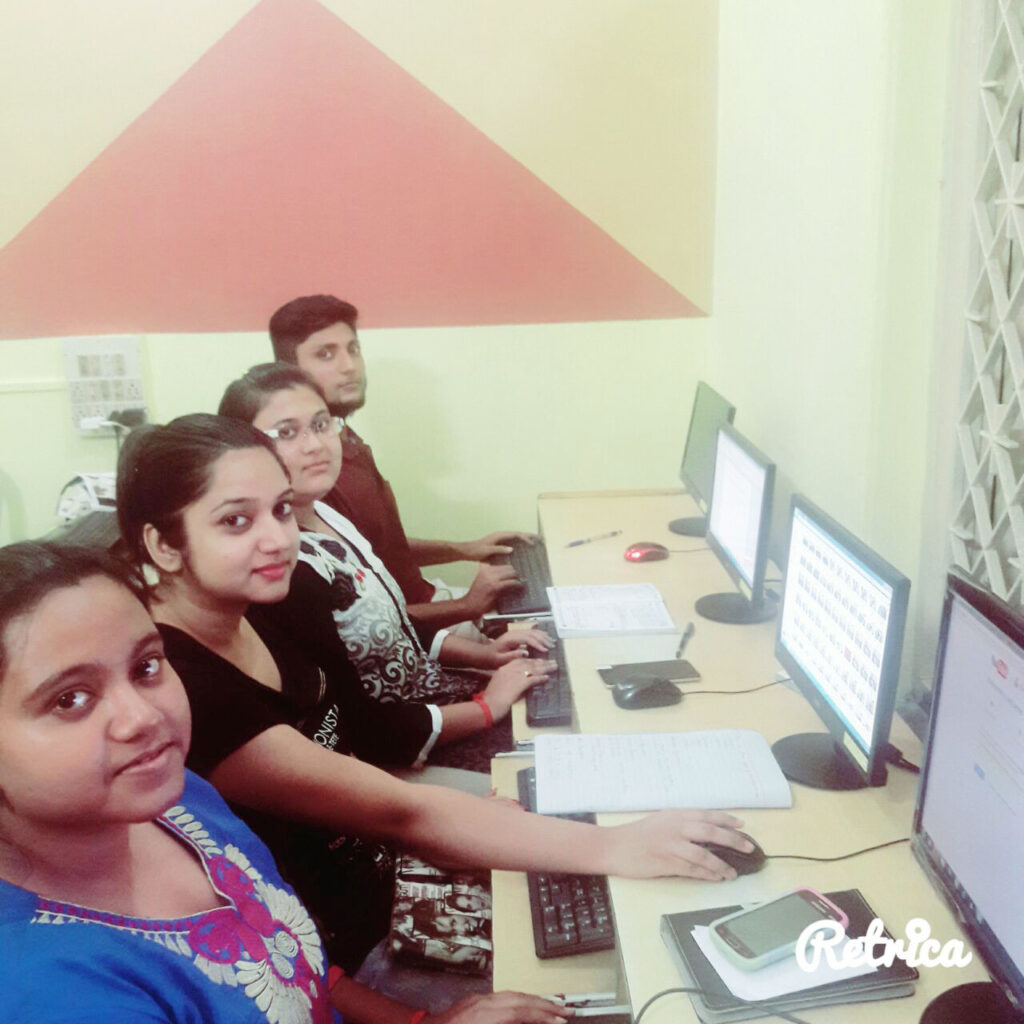
- How Practical Data Analytics Training Helps Build Career Opportunities in Kolkata ?
- How Students Can Choose the Right Computer Training Institute in Kolkata for Career Growth ?